How to Calculate Food Cost Percentage (And Actually Use It to Protect Your Margins)
- Amiya

- Apr 8
- 3 min read
Updated: Apr 18
What Is Food Cost Percentage and Why It Matters More Than Revenue
Revenue tells you how much came in. Food cost percentage tells you how much you kept. It's the ratio of ingredient spend to food sales - and for most restaurants, the target is 25–30%. Go above that, and your margins disappear even when the dining room is full.
The Formula: How to Calculate Food Cost Percentage Step by Step
Total ingredient cost divided by total food revenue, times 100. If you spent $250K on ingredients and made $1M in food sales, your food cost is 25%. The key: only count actual food and beverage. Cleaning supplies and paper products are operating expenses -including them inflates your number and leads to bad decisions.
How to Calculate Cost Per Dish (With a Real Menu Example)
A chicken parm using
$2.80 in chicken,
$0.60 in breading,
$0.90 in sauce, and
$0.40 in cheese
costs $4.70 to plate.
Sell it for $18 and your food cost on that dish is 26% ( ($4.7/$18)*100).
Do this for every menu item. The dishes that surprise you are usually the ones selling the most.
Why Your Food Cost Percentage Keeps Changing — and How to Stop Chasing It
Supplier prices shift with every delivery. A 5% protein increase can swing your overall food cost by a full point. If you're calculating monthly, you're reacting to problems that happened weeks ago. The fix: track cost with every invoice so you catch changes the day they happen.
Common Mistakes Restaurants Make When Tracking Food Cost
The biggest: including non-food items in the calculation. Others include ignoring waste, not accounting for staff meals and comps, and relying on recipe costs that haven't been updated in months. Your food cost is only as good as the data feeding it.
How to Use Food Cost Data to Price Your Menu Profitably
If your target is 28%, a dish costing $5.00 should price around $17.85. But compare that against what customers will actually pay. Use your food cost data to decide which items to promote, which to re-engineer, and which to retire.
When to Stop Using Spreadsheets and Let Software Do the Math
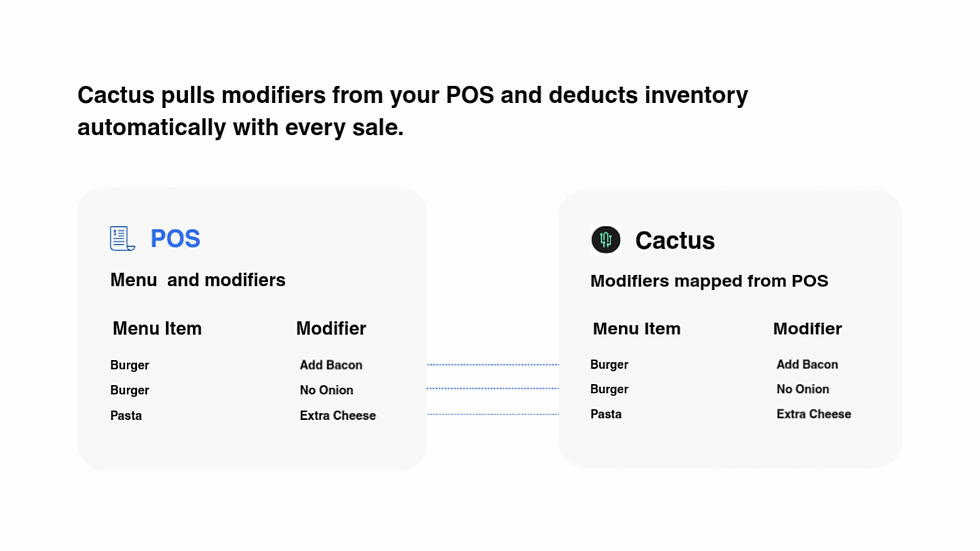
Spreadsheets work until you're processing more than a few invoices per week. Then the manual entry eats hours, formulas break, and numbers go stale. Food cost software pulls costs from invoices automatically, updates recipes when prices change, and shows you where you stand today - not last month. Most operators who switch save 10+ hours a week.
To get a quick idea of your food costs, use our Food Cost tool in 3 easy steps (No sign up needed)!
Step 1: Enter your restaurant name here.
Step 2: Select a Menu Item.
Step 3: View Costs and Insights to improve them.

We recommend using a food cost software like the one we offer, as soon as you can, since getting used to the software in the early days can make it part of the standard operational procedures saving lots of time and money later on.
Quick Links to learn more about Cactus Food Cost Software!
Learn more here:
DISCLAIMER: This information is provided for general informational purposes only, and publication does not constitute an endorsement. Cactus does not warrant the accuracy or completeness of any information, text, graphics, links, or other items contained within this content. Cactus does not guarantee you will achieve any specific results if you follow any advice herein. It may be advisable for you to consult with a professional such as a lawyer, accountant, or business advisor for advice specific to your situation.